Food Service Guidelines
Food Service Guidelines
About Food Service Guidelines
Food service guidelines are standards for healthier food and beverages and food service operations in worksite and community settings. Food service guidelines are important because people often lack access to healthier foods in settings where they live, work, learn, heal, and play.
Did You Know?

Each year, chronic diseases account for 70% of all deaths in the United States. Poor diets lead to chronic illnesses, such as heart disease, type 2 diabetes, and obesity.
More than 7 million adults eat or drink at a cafeteria on a given day, and over 9 million do so from a vending machine.

Foods that people get at work are generally high in empty calories, sodium, solid fat, added sugars, and refined grains.
Benefits of Food Service Guidelines
Food service guidelines help create a healthy food environment. The guidelines may:
- Contribute to health and wellness of employees and visitors.
- Create expectations for healthier food and beverage availability.
- Strengthen local food systems.
- Improve facility management of natural resources.
- Increase energy efficiency.
- Reduce harmful environmental impact.
Settings for Food Service Guidelines
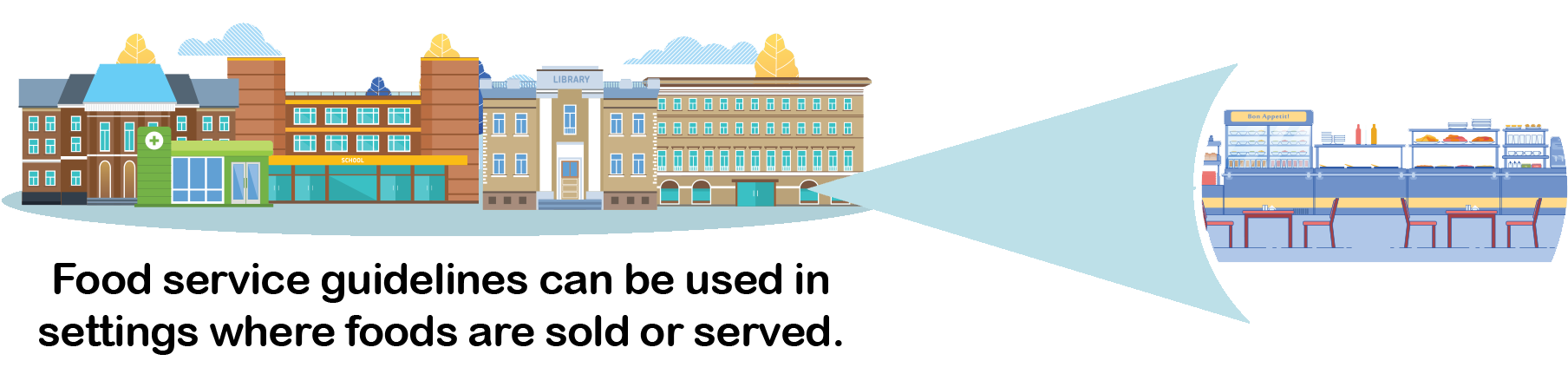
Food service guidelines can be used in settings where foods are sold, such as federal, state and local government facilities, hospitals and healthcare facilities, colleges and universities, private worksites, parks and recreation centers, and stadiums. They can also be used in venues such as cafeterias and cafés, snack bars and grills, concession stands, micro markets, sundry shops, and vending machines.