My Nutrition Guide
Double Up Food Bucks Alabama
How To Rank Foods
STEP 1
- Determine what food group the item is in: Fruits & Vegetables, Grains, Protein, Dairy, Non-Dairy Alternatives (e.g. soy milk), Beverages, Mixed Dishes (e.g. soup), Snacks, Desserts, or Condiments. If you don’t know which food group to use, check the alphabetic list of food items on our Food Categories for Raking document. Click here to download it.
- Desserts are all ranked RED automatically and you don’t have to check the nutrient levels.
- Condiments (e.g. sauces), cooking staples, and baby food are Unranked so you don’t need to check the nutrient levels.
STEP 2
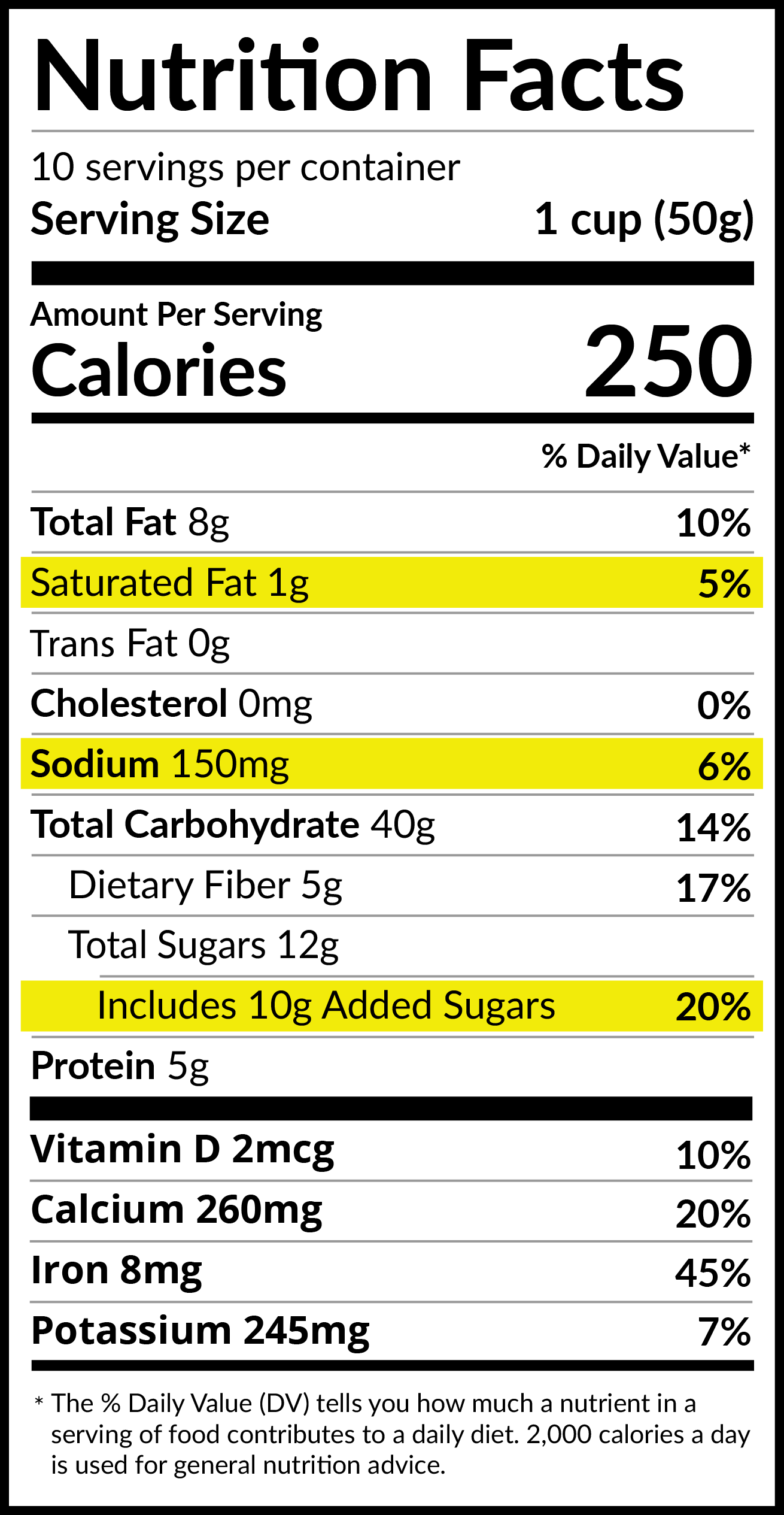
- Look at the Nutrition Facts label of the food and compare Saturated Fat, Sodium and Added Sugar values to the Nutrition Guide. Click here to download the Nutrition Guide.
- Use Added Sugars when available; if not, use Total Sugars.
STEP 3
- Determine which color the Saturated Fat falls in.
- Determine which color the Sodium falls in.
- Determine which color the Added Sugars falls in. For Fruits, Vegetables and Dairy, if Added Sugars is not available, use the Total Sugars amount listed on the guide
STEP 4
- If all nutrient levels fall within one color, then the food is categorized by that color.
- If the nutrient levels fall within multiple colors, categorize the food by the least encouraged color, either YELLOW or RED. For example: If saturated fat and sugar both fall in the Green category, but the sodium falls in Yellow, then the food is categorized in YELLOW .
How To Read Nutrition Labels
The Nutrition Facts label on packaged foods is based on updated science and dietary recommendations for Americans. Using the label can help you choose foods for a healthy diet. The label is required on all packaged foods made in the United States and imported from other countries.
Saturated Fat
When it comes to health outcomes, the type of fat you eat matters more than the overall amount of fat. The Nutrition Facts Label shows total fat in grams and percentages of calories from fat.
The Nutrition Facts Label has separate lines for saturated and trans fats, which are less healthy than other types of fat. Look for foods with very little saturated and trans fats.
Added Sugars
Keep your intake of added sugars to less than 10% of your total daily calories. That means if you consume 2,000 calories in a day, added sugars should account for no more than 200 calories.
Sodium
Most sodium we consume is from salt, and salt is commonly in processed foods. Read labels and choose the product with less sodium.
Serving Sizes
Be sure you know how many servings are in food. For example, if you buy what looks like an individual sized chicken pie, check the Nutrition Facts label. It might actually be two servings. If you eat the whole pie, you will eat twice as many calories and twice as much sodium listed on the label.